Unblock Toilets in Stevenage: Easy DIY Guide
Home Maintenance, Blocked Toilets Stevenage
How to Unblock a Toilet in Stevenage: A Calm, Practical Guide
A blocked toilet is stressful enough without worrying about what to do next. This step‑by‑step guide walks you through safe, simple ways to unblock a toilet in your Stevenage home, and explains when it is time to call a local professional.
Stay Calm and Check the Situation First
When a toilet bowl fills up instead of flushing away, resist the urge to keep pressing the flush. This can cause an overflow and a bigger mess. Wait a minute or two to see if the water level drops on its own; sometimes partial blockages clear slowly without any extra effort.
💡 Pro Tip: Turn off the water at the isolation valve behind or beside the toilet if the bowl looks close to overflowing. This stops more water entering the pan while you work.
Step 1: Try Hot (Not Boiling) Water and Washing-Up Liquid
For many mild blockages, a simple mixture of hot water and washing-up liquid can be surprisingly effective. Add a generous squeeze of washing-up liquid into the toilet bowl. Then fill a bucket with hot tap water (not boiling, which could damage the porcelain) and pour it steadily from waist height into the centre of the bowl. The combination of heat and soap helps break down organic matter and lubricates the pipes.
Leave this to sit for 10–15 minutes, then attempt a single flush. If the water drains more freely, you may have already solved the problem without using any tools or chemicals.
Step 2: Use a Proper Toilet Plunger
If the blockage remains, reach for a toilet plunger with a flange (the extended rubber collar at the bottom). This style creates a stronger seal in the curved outlet of the toilet than a flat sink plunger. Place the plunger over the opening, making sure it is fully submerged in water to avoid splashing and to improve suction.
Push down gently at first to expel trapped air, then plunge with firm, rhythmic motions for 15–20 seconds at a time. You are aiming to move the blockage back and forth, not just force it further down. After a few rounds, lift the plunger and check whether the water level drops. If it does, try a test flush and repeat if needed until the toilet flushes normally again.
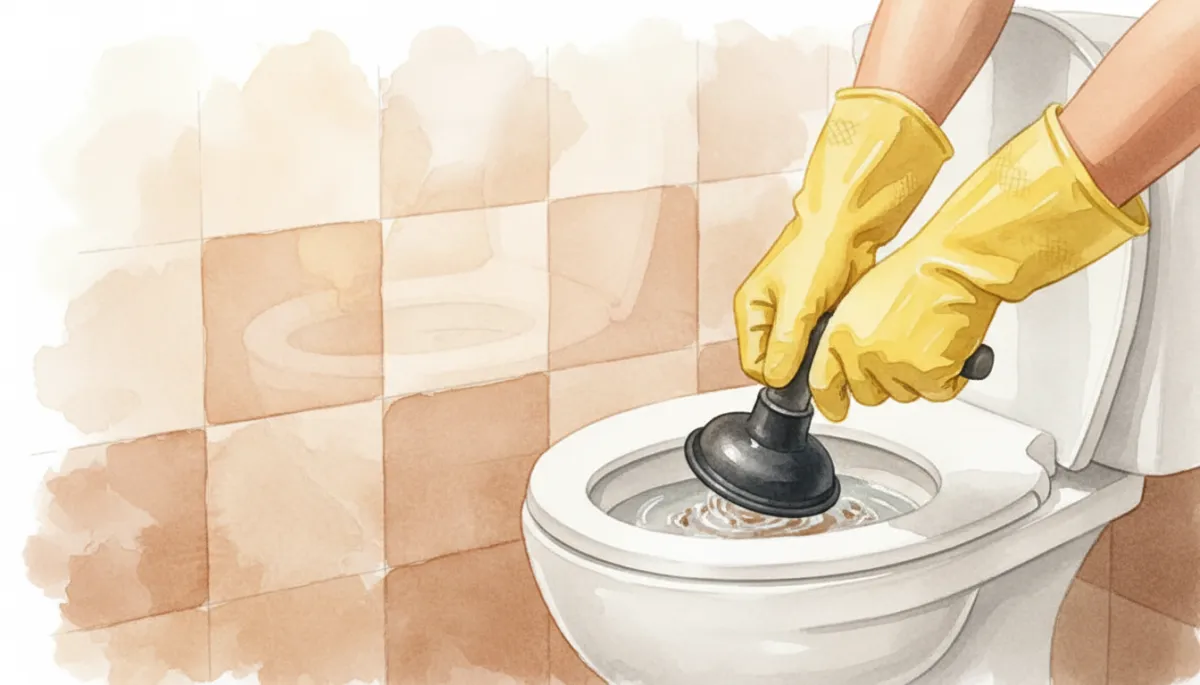
A good seal with a flange plunger often clears typical household toilet blockages.
Step 3: Consider a Toilet Auger for Stubborn Blockages
If plunging does not work, a toilet auger (also called a closet auger) can reach deeper into the bend of the toilet. This tool has a flexible coil that you gently feed into the bowl and turn to break up or hook onto the obstruction. If you are not confident using one, many Stevenage plumbers offer fixed-price callouts and can clear a toilet quickly with professional equipment.
⚠️ Warning: Avoid wire coat hangers or sharp DIY tools. They can scratch the porcelain, damage seals, and even worsen the blockage.
When to Call a Stevenage Plumber Instead
Sometimes a blockage is a sign of a wider drainage issue, especially in older Stevenage properties or shared buildings. If several fixtures (for example, your toilet, bath, and kitchen sink) are draining slowly or backing up at the same time, the problem is likely in the main waste pipe or outside drains. In these cases, home remedies will not be enough and you should contact a local drainage specialist as soon as possible.
Local plumbers in Stevenage are familiar with common issues in the area, from tree roots in garden drains to older clay pipework. Many offer 24‑hour emergency services, which can be invaluable if your only toilet is completely unusable or there is sewage backing up into the property. If you are in a rented home, inform your landlord or letting agent promptly so they can arrange a professional visit.
Preventing Future Toilet Blockages in Your Stevenage Home
Once your toilet is flowing freely again, a few simple habits will reduce the chance of another blockage. Only flush human waste and toilet paper; wipes, cotton pads, kitchen roll, and sanitary products should always go in a bin, even if the packaging claims they are “flushable”. Use moderate amounts of toilet paper, and keep a small bathroom bin with a lid to make the right choice easy for everyone in the household.
If you live in an area of Stevenage with older pipework or have had repeat issues, consider asking a local plumber to carry out a quick inspection. They can check for underlying problems and offer tailored advice—often a worthwhile investment compared with the stress of regular emergency blockages.
Final Thoughts
Unblocking a toilet in Stevenage does not have to be daunting. By starting with gentle methods—hot water and washing-up liquid, followed by careful plunging—you can often clear a simple blockage yourself. When these steps are not enough, or when several drains are affected, calling a local professional is the safest and quickest way to protect your home and get everything flowing smoothly again.
